Friday, July 27, 2012

Final Evaluation

Thank you for all the time and effort you put into this class.

I know this was nothing like you were used to. This was a college sophomore-level course that typically takes place over fifteen weeks, and you completed it in fifteen days. That is a major accomplishment, and you should all be proud of yourselves.

While I'm at home grading your responses and third closed-book assessments, I would appreciate it if you would take the time to evaluate me. Please visit the survey at http://www.surveymonkey.com/s/FJLKNTZ , and let me know what you thought of the class and of me, your instructor.

The survey responses are anonymous. However, if there is anything you'd like to share with me or your classmates more publicly, feel free to do so in the comments.

Wednesday, July 25, 2012

Review Sheet for Third Closed-book Exam

On Friday we'll finish up the course with the third closed-book exam. There will be a review session at 1:45 PM in 1108 Tydings Hall.

Included here is the review sheet for the exam.

Don't hesitate to email me if you have questions, but do your best to develop your own answers first.

Thinking about the Unthinkable


Here are a few links regarding interstate war that you might find interesting.

Embedded at the top of this post is a long (by the standards of the Internet, at least; ~15:00) video depicting--in 8-bit video game form--every confirmed nuclear detonation from 1945 through 1998. You can view it full size here.

Related is a post on HowStuffWorks entitled, "What would nuclear winter be like?" In class, we discussed briefly the concept of nuclear winter. This post provides greater detail on the theory.

Finally, I'd like to draw your attention to one of the links that has occupied the right-hand sidebar since the start of the session. Erik Sass at Mental Floss has been recounting every major event leading up to World War I in blog form. This is a must read for history and/or international security geeks (like me).

Feel free to share your thoughts in the comments.

Tuesday, July 24, 2012

Bangladesh's Policy towards the Rohingya People

Rohingyas recount terror of Burma clashes

Vishal sent me this story. I'll share his summary of the matter since he seems to get at the heart of it:
I found an interesting article about Bangladesh's policy towards the predominantly Muslim Rohingya people, who were being terrorized by Buddhist nationalists in Myanmar. Many Rohingya families illegally entered Bangladesh and settled in refugee camps, but Bangladesh refused to help them and has sent thousands back to Myanmar. Although this is a huge human rights violation, Bangladesh is battling its own problems. It's interesting to consider whether Bangladesh's actions are justified or not. Both IGOs and NGOs are trying to be involved, namely the UNHCR and Human Rights Watch, but Bangladesh refuses to give them any support.
It seems there's no shortage of humanitarian crises nowadays, but perhaps that's just because we're aware of them and we care more than we used to--or maybe there are in fact more humanitarian crises.

This story actually touches on several concepts that we've discussed in the course. Can you think of a few?

Monday, July 23, 2012

Tensions in the South China Sea

China Sends Troops to Disputed Islands
Vietnam and China have fought since the 1970s over the three island groups, and last month, Vietnam passed a law that claimed sovereignty over the Paracels and Spratly Islands. In response, China said the islands were the “indisputable” territory of China.
What are the different ways that the PRC and Vietnam might resolve this issue? What role could non-state actors play? Should this be something the US concerns itself with and, if so, why?

Friday, July 20, 2012

Another Potential Iran-Israel Flashpoint

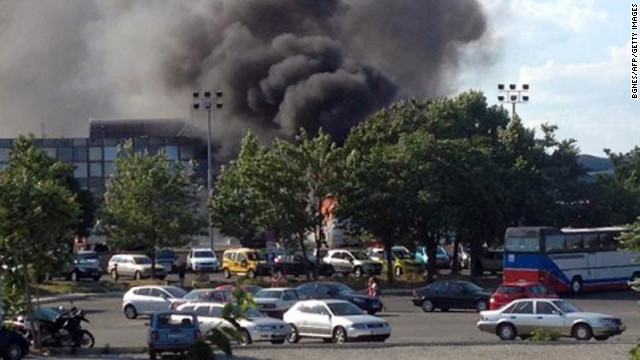
Israelis killed in Bulgaria bus terror attack, minister says
A deadly explosion on a bus carrying Israeli tourists outside an airport in Bulgaria was "clearly a terrorist attack," Israeli Defense Minister Ehud Barak said Wednesday... The attack was probably initiated by a group under the auspices of "either Iran or other radical Muslim groups," according to Barak, who cited Hezbollah and Hamas as likely suspects.
Matt sent me this piece the other day. How do the events herein, and the claims that Israel has made, correlate to what we have learned about so far in the course?

Wednesday, July 18, 2012

Review Sheet

The review sheet for the Second Closed-book Assessment is now available. Please review it before the review session in 1108 Tydings Hall, Thursday at 1:45 PM. Try to come to the session with questions in mind.

Also, if you have not yet taken the mid-course evaluation survey, please do.

Syria: From Deadly to Deadlier

Who were the officials killed in the Damascus bombing?
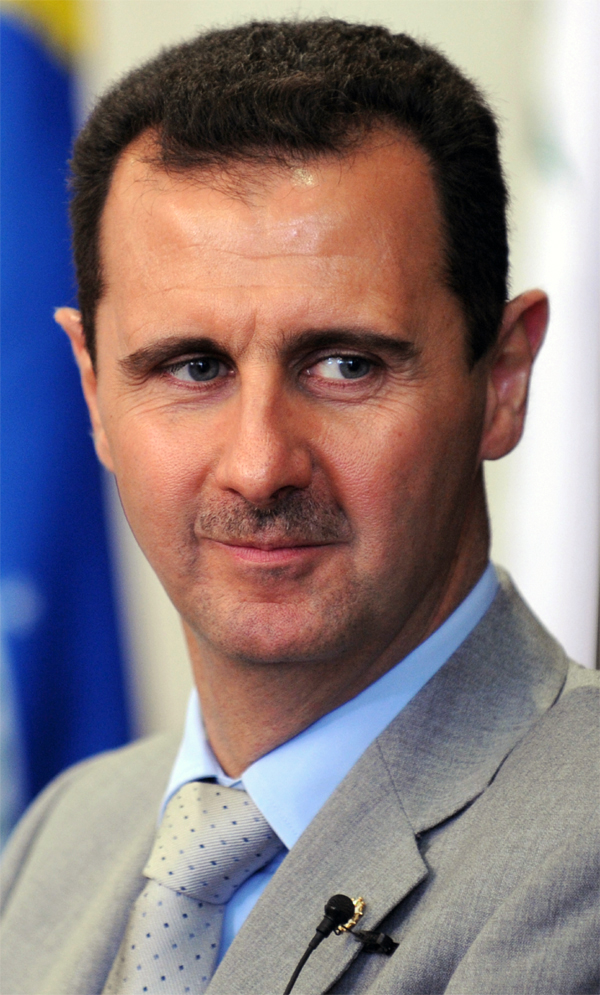
A bombing in Damascus killed two of Syrian President Bashar al-Assad’s top security officials, the Post reported, and the opposition Free Syrian Army claimed responsibility for the attack. Dawoud Rajha and Asef Shawkat were reportedly central to the Assad regime.
In one of the boldest strikes yet against the Syrian leadership, terrorist bombs killed advisers close to President al-Assad.

Of course, one man's terrorist is another man's freedom fighter. What effect will this development have on the situation inside Syria and/or the global response to it?

Tuesday, July 17, 2012

Mid-course Evaluation: How'm I Doin?

Tomorrow we will be about halfway through the course. This seems like a good a time as any to get feedback from you on the course so far.

The answers you provide will help me determine what's working and what isn't. I will do my best to make any changes that would improve your learning experience.

You can access the survey at this link: http://www.surveymonkey.com/s/8MFBRMY . Remember that your responses are fully anonymous.

The Internationalization of the Sudanese Conflict

A playground for proxies: Iran and Israel may become more involved in the Sudanese imbroglio
Since an Islamist-backed military coup brought Sudan’s president, Omar al-Bashir, to power in 1989, Shia-run Iran has seen Sunni-dominated Sudan as a useful ally in north-east Africa... Israeli ties to the southerners go back to the 1960s, when they first received arms and training. More recently Israeli security experts have reportedly been working with South Sudan’s revamped military.
Jake sent in this story about international involvement in the conflict between Sudan and South Sudan. What are the implications of this involvement for the region and for international security?

Monday, July 16, 2012

Questions and Considerations for Thirteen Days

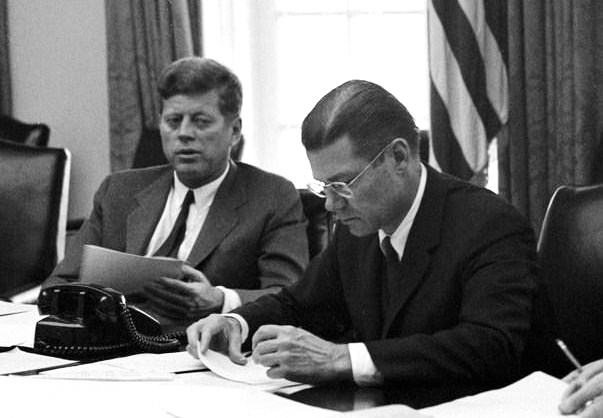
Pres. Kennedy and Sec. McNamara
Think of these questions and issues while watching the movie and afterwards.

If you have any questions about the movie, or would like to put forward some answers to these questions (only one or two at a time, please) feel free to do so in the comments.
  1. Keep track of the people who are involved in each decision and what their official jobs are. 
  2. What methods did the Kennedys use to go about making a decision?
  3. What are the different solutions that are put forward in Thirteen Days?
  4. What are the pros and cons of the different solutions?
  5. Who supports which options?
  6. How unified is the administration in developing and choosing solutions?
  7. Why are some are some members of the administration so worried about world opinion?
  8. Why is it so important that the surveillance pilots lie about being shot at?
  9. Why is MacNamara so concerned about the Navy firing “star shells?”
  10. Which conceptual models (from Allison: Rational Policy; Organizational Process; Bureaucratic Politics) do you think best explains the events of the Cuban Missile Crisis? Why?
  11. Are there certain episodes in the Cuban Missile Crisis that are better explained by one conceptual model or another? When and why?

Saturday, July 14, 2012

How We Feel about Child Soldiers


The image above is a "word cloud." A word cloud (or tag cloud) is a visual representation of a set of words. In this case, the size of the words is in proportion to how frequently they appeared in the set (the colors are random). I drew the set from the responses you all submitted in response to the child soldiers presentation by Group #2 (Jeremy, Vishal, John & David).

To create the image, I used the Wordle tool. You can design word clouds of your own: just click on the Wordle link and enter a URL or a word list.

Feel free to share in the comments any thoughts you might have about this terrible issue.

Thursday, July 12, 2012

A "Legal Coup" in Paraguay

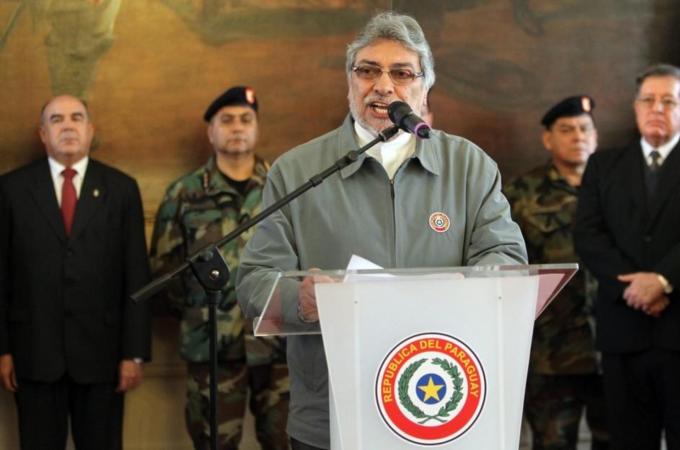
Behind the Paraguayan coup
Following a skewed vote in the opposition-controlled Congress, Lugo was removed from office for allegedly encouraging land seizures. In an upset, Vice-President Federico Franco of the Liberal Party assumed the presidency... There's no evidence that the US played a role in the impeachment, though to be sure the US defence establishment had plenty of reason to be unhappy with Paraguay's left-leaning president.
What is it mean for a coup d'etat to be "legal?" Can you think of similar historical examples? What might this mean for democracy in Latin America?

Wednesday, July 11, 2012

Update and Materials Added

Update: review sheet for first assessment now available.

As you may have read in my email, I have set up a review session for tomorrow afternoon. I have reserved 1108 Tydings Hall beginning at 1:45 PM.

You should have a review sheet by then, and you're welcome to ask me and your classmates questions about the upcoming assessment.

If you had intended to meet with me during office hours, please let me know and we can meet before, after, or at another time by appointment.

I have also posted slides from yesterday's and today's classes. You can view them above under the Slides tab.

Tuesday, July 10, 2012

Who Holds the Power in the New Egypt?

Egypt: Who holds the power?
The dispute between Egypt's new President, Mohammed Mursi, the Supreme Council of the Armed Forces, and the Supreme Constitutional Court over the dissolution of parliament has raised questions about where power lies in the country.
So who really has the power in Egypt? Think about what power is, and where it comes from, before you answer that question. Also, is there anything the US could do to steer Egypt towards a more democratic course?

Monday, July 9, 2012

You may have noticed…

I have posted two slides from today's class on the blog. You can view them here.

Also, I officially changed my office hours to Monday and Thursday from 1:45 - 2:45 in 1115A Tydings Hall.

Don't forget to fill out the introductory survey—it's your class participation credit for Monday.

Finally, you'll notice that the post below this one is an opportunity to gain extra participation points. Constructive dialogue on the issue is welcome. Please leave your name if you comment, so you can receive credit.

Sunday, July 8, 2012

Unrest in Syria

Clinton: "Friends of Syria" must unite to stop Russia, China "blockading" progress
The question, explains CBS News State Department correspondent Margaret Brennan, is whether Russia and China will finally and completely sever the financial lifeline which is keeping Assad in power. Secretary of State Hillary Rodham Clinton has said they've essentially given Assad a free pass by failing to implement sanctions and continuing to import Syrian oil.
What should foreign powers do about conflicts in sovereign states? Should they get involved at all?

Introductory Survey

Please fill out the introductory course survey. This questionnaire will help me get to know you better and tailor the course to your needs and desires.

It also counts for your attendance score on the first day of class.

Thank you!

surveymonkey.com/s/X2M62R9

Saturday, July 7, 2012

Course Syllabus

Since we live in an electronic world with dwindling resources, I will not be printing copies of the syllabus for the class.

Please download the PDF or visit the version on this blog.